Unwrapping Wisdom: How Christmas Conversations in the Village Can Build Critical Thinkers
By Rosa Kemirembe
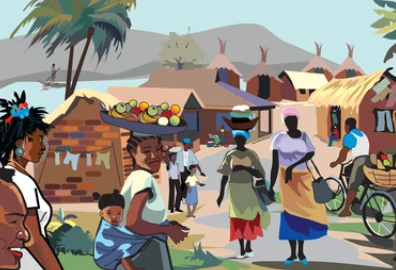
As the festive season arrives, many of us across Uganda will embark on the familiar journey from Kampala, Mbarara, Gulu, and beyond, heading home to our villages. The holiday promises a symphony of noise, laughter, chores, and endless chatter. But amidst this joyful bustle lies a hidden classroom. As parents and guardians, we have a unique opportunity to transform everyday moments into engaging conversations that build our children into observant, critical thinkers and innovative problem-solvers.
The journey itself is the first lesson. Instead of a quiet drive, engage with the changing landscape. Ask: “Why do the buildings shift from tall brick to mud-and-wattle or tiled roofs to corrugated roofs as we travel? What does this tell us about the economy, land, and tradition?” This simple question encourages observation and connects geography to human life. Follow with: “Your uncle built his house himself. What skills did he need that we might not use in the city?” This isn’t a test, but a shared inquiry, nurturing curiosity about the world.
Upon arrival, the rhythm of village life offers rich learning. Even chores become fertile ground. While cutting grass, ask: “What’s the purpose, beyond neatness? What if we didn’t? How would it affect the fruit trees or attract insects?” Prompt them to innovate: “If we had no panga, what tool could we invent?” You’re teaching them to see systems, consequences, and possibilities.
At the water point, turn washing into an engineering challenge. “Trace the journey of this water from borehole to garden. Where is it lost? How could we design a better gutter for Grandma to collect rainwater?” Here, you nurture a problem-solver who views resources as precious.
The kitchen transforms into a live science lab. While making mandazi (Ugandan doughnuts): “Why does the dough rise? What if we used cold milk instead of warm? Let’s test a small batch.” With matooke (green bananas): “Why steam in banana leaves? What does the leaf add that metal doesn’t?” A failed *mandazi* becomes a powerful lesson in cause and effect. Even washing clothes can spark chemistry: “Observe how soap suds behave in well water versus rainwater. Why the difference?”
Feeding animals invites lessons in biology and care. “Why do chickens eat maize and cows eat elephant grass? Look at their beaks and teeth. How are they designed for different foods?” Then think forward: “What would we change for healthier chicks or more milk?”
A walk through the banana shamba is a masterclass in sustainability. Point to a plant with a pup: “Why did the farmer leave this young one? How does this ensure year-round food?” Introduce a problem: “What threats, disease, animals, might this crop face? If you were the farmer, how would you solve it?” You’re teaching agricultural planning and resilience.
Perhaps the most profound classroom is the verandah, listening to elders. Prepare your children: “Ask Jajja or Shwenkuru (Grandpa): ‘What was this land like when you were my age? What is the biggest change you’ve seen, and what caused it?’” This teaches that history lives in memory, fostering respect for indigenous knowledge and understanding environmental change.
Even bonding moments, repairing a bike, weaving a mat, building critical thinking. Ask: “Why is this knot stronger? How would you explain this process to your younger sibling?” To teach a concept, one must first master it, thereby deepening understanding and communication skills.
The goal is not to turn every sweet moment into a quiz, but to model the habit of asking better questions. It is to show that learning is holistic, found in the soil, the kitchen steam, the calloused hands of elders, and the logic of a well-tied knot. It’s about helping children connect what they see with why it is and how it could be better.
This Christmas, let us give our children the enduring gift of curiosity. Let’s have conversations that matter. Intentional dialogue is our most powerful teaching tool outside the classroom, turning ordinary moments into lasting lessons that help our children connect, question, and truly understand the world around them.
May your holiday be filled with joyful discovery, deep connection, and countless “why” and “how” questions.
Rosa Kemirembe is an educator and host of the “Teaching for Success” podcast series. Discover more educational engaging topics at www.teachingforsuccess.ca