From Tragedy to Action: Lessons for Schools on Student Safety
By Rosa Kemirembe
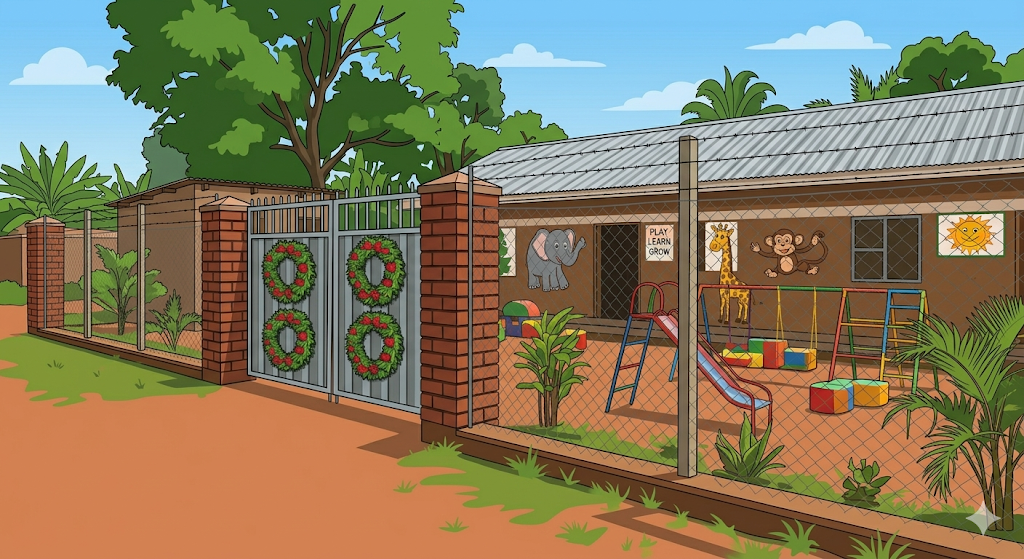
Our work is built on a simple belief: every child, no matter their background or ability, deserves a safe, supportive, and successful learning environment. Today, that belief is tested by tragedy.
I extend my deepest condolences to the families who lost their precious children in the horrific attack at a kindergarten school in Ggaba, Uganda. To the parents, siblings, grandparents, and the entire school community, we mourn with you. No words can ease such pain, but we stand with you in grief and in the demand for change.
A Tragedy That Should Not Have Happened
Four children were murdered in a daycare in Ggaba, Uganda. I will not comment on the suspect or the reason for his alleged actions. That is for the courts to determine. But I would like to talk about policies that can prevent such incidents from happening, and crucially, how these policies must be inclusive of all children, including those with disabilities, different learning needs, or medical conditions.
The safety of all humans, and more especially all children, is paramount. This incident is one you would expect to hear about in North America, where several such tragedies have occurred over the years. But not in Uganda. Not in our country. We have always felt that our schools are sanctuaries. This event has shattered that illusion.
The Ministry of Education and the police, instead of focusing only on bringing the murderer to book, should also be talking about how we can keep all students safe, regardless of whether they can run fast, follow verbal commands, or stay silent for long periods. Justice after the fact does not bring back a single child. Prevention is what we need to work towards. And prevention must include every single child.
An Inclusive Approach to Fire Drills and Lockdowns
In many schools around the world, there are comprehensive health and safety policies. These are not just documents filed away. They are practiced. They are drilled. They become muscle memory.
But here is where inclusion becomes critical. A standard lockdown drill may terrify a child with sensory processing issues. A child who uses a wheelchair cannot hide under a desk. A child who is non‑speaking cannot shout for help. So when we talk about safety, we must talk about inclusive safety.
Let me walk you through the most critical safety protocols that should be adopted in every Ugandan school, with inclusive adaptations.
Fire Drills
In many countries, schools hold fire drills at least six times per year. Children learn to line up quietly, exit the building, and gather at a safe assembly point. For children with mobility challenges, there must be evacuation chairs or designated helpers. For children with autism, social stories and practice sessions reduce fear. Inclusion means no child is left behind.
Hold and Secure
This is used when there is danger in the vicinity of the school, for example, a police chase nearby or a wild animal loose. All students come inside. Exterior doors are locked. For children who may not understand why they cannot go outside, teachers need visual cues, simple language, and calming support.
Lockdown
This is for when danger is inside the school, an intruder, an active attacker. Students and teachers move to a safe room, lock the door, turn off lights, move out of sight lines, and remain absolutely silent. But what about a child who cannot stay silent due to a tic disorder, or a child who cannot move quickly? Inclusive planning means pre‑assigning helpers, using noise‑reducing headphones, and practicing adapted silence games. Every child deserves a plan.
There are other variations, shelter in place for chemical spills, evacuation for bomb threats. But these three, fire drill, hold and secure, lockdown, are the foundation. And they must be practiced inclusively so that children with disabilities are not left to fend for themselves.
Physical Security Measures Must Be Inclusive by Design
Policies are useless if the building itself excludes certain children from safety.
Locked gates
The main entrance should never be open and unattended. But the locking system must allow for easy exit by all, including children in wheelchairs or with visual impairments. Push bars, clear signage, and regular accessibility checks are part of inclusion.
No‑go zones for non‑staff
This includes parents. A barrier, a door, a reception area, a gate, between the front office and the classroom wing protects everyone. However, children with medical needs, for example, a child who needs a parent to administer insulin, must have a safe, controlled way to meet caregivers without compromising overall security.
All doors locked during school hours
This includes classroom doors. Locked doors save lives. But what about a child who cannot open a heavy door in an emergency? Inclusive design means doors that lock from the inside but open easily from the inside without a key. Teachers must know exactly which children need assistance unlocking or exiting.
Covered sight lines
Windows should have blinds or frosted film so an intruder cannot see inside. For children who need natural light or visual cues to regulate, we can use adjustable blinds or strategic placement. Inclusion is not about making perfect choices, it is about making thoughtful choices for every child.
Teaching Children How to Respond: Inclusive Drills
Some will say, "These are nursery children. They are too young to understand lockdowns." Others will say, "What about children with intellectual disabilities or autism?"
I respectfully disagree. Children as young as three can learn simple, non‑frightening responses, if we adapt for inclusion.
For example, "The Quiet Mouse" game can be modified:
- For children who cannot stay still, we teach a "safe corner" where gentle movement is allowed.
- For children who make sounds involuntarily, we do not punish; we place them in a room with white noise or a separate space.
- For children who need visual schedules, we use picture cards showing each step: door closed, lights off, quiet mouth, safe body.
In countries that have experienced school shootings, even kindergarteners practice these drills, and children with disabilities practice adapted versions. It is not traumatizing if done with care, calm voices, and inclusion at the centre. What is traumatizing is being unprepared, or being prepared only for the "typical" child, leaving others behind.
Teachers and administrators must also practice inclusive responses. They must know:
- Which child needs physical assistance during a lockdown?
- Which child may have a seizure if frightened?
- Which child cannot understand verbal commands and needs a picture board?
A school that practices inclusion saves all its children.
A Call to Action
I call on the Ministry of Education, on school owners, on head teachers, on parents: Do not wait for another tragedy. Do not let the memory of these four innocent children fade before action is taken.
Make safety inclusive by design. A lockdown plan that does not work for a child in a wheelchair is not a plan. A drill that terrifies a child with autism is not a drill. A school that protects only some children is not a safe school.
You do not need millions of shillings. You need locks, drills, training, the will to change, and the commitment to include every child.
Start today! Lock your gates. Lock your classroom doors. Practice inclusive silence drills. Teach your teachers to ask, "What does each child need to stay safe?" And stop letting non‑staff wander freely through your school.
Safety that is not inclusive is not safety at all. Our deepest condolences remain with the families of Ggaba, the school community, and a nation that must now do better for every single child. Stay safe. Protect all our children.
If you want to read more articles from Teaching For Success, visit our website https://teachingforsuccess.ca